Charles Strouse and the Road to Hello, Dolly!
Charles Strouse and the Road to Hello, Dolly!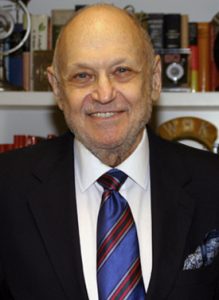
"The sun'll come out tomorrow..."
"Gray skies are gonna clear up..."
"Boy, the way Glenn Miller played. Songs that made the hit parade..."
There are certain names in musical theater that become part of our lives long before we ever meet them. Charles Strouse was one of those names for me. Long before I had the privilege of speaking with him, his music had already become part of my personal soundtrack. Like millions of others, I grew up hearing Tomorrow, Put On A Happy Face, and Those Were the Days. Years later, while researching the history of Hello, Dolly!, I discovered that Charles had his own fascinating connection to the show's development. I was delighted when he agreed to share that story with me.
Those songs have become part of our collective consciousness. They are woven into the fabric of American culture and have been embraced by generations who may not even realize they all came from the same extraordinary composer.
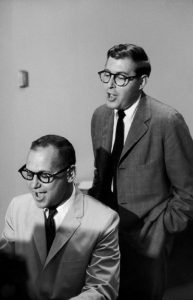
When Charles Strouse passed away on May 15, 2025, at the age of 96, the theater community lost one of its true giants. Fortunately, his music—and his stories—remain with us.
Charles was a member of both the Songwriters Hall of Fame and the Theatre Hall of Fame and was one of the most successful composers in the history of the American musical theatre. His work includes Bye Bye Birdie, Applause, Annie, Golden Boy, Rags, Nick and Nora, and many others. His songs have been recorded by everyone from Frank Sinatra and Tony Bennett to Barbra Streisand, Nina Simone, and Louis Armstrong.
When I sat down with Charles, however, I wasn't there to discuss Annie or Bye Bye Birdie. I wanted to explore one of the most fascinating "what if" stories in Broadway history: Charles Strouse's connection to Hello, Dolly!
What follows is Charles Strouse's recollection of those events. As with all oral histories, memories may differ from other accounts, but what makes these stories so valuable is hearing them directly from the people who lived them.
Charles' involvement with Hello, Dolly! began when he received a phone call from Gower Champion...
The story begins in Detroit in November of 1963.
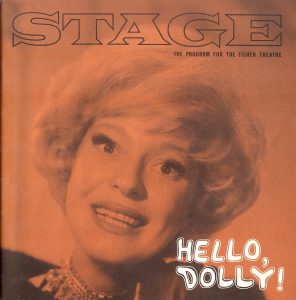 The Call from Detroit
Theater aficionados and insiders have written about and speculated about Charles Strouse's involvement in Hello, Dolly! for decades. Charles even devoted a chapter to the story in his autobiography, Put On A Happy Face. Although I had read the book, I had no desire to simply repeat what Charles had already written. In fact, despite his generous offer to use anything I wished from the book, I wanted this chapter to come directly from our conversation.
What follows is Charles Strouse's recollection of those events.
Charles' involvement with Hello, Dolly! began when he received a phone call from Gower Champion in early November 1963. At the time, Hello, Dolly! was playing its first performances in Detroit, and according to Gower, the show was in trouble.
The first thought Charles and his longtime collaborator Lee Adams had was not about the show itself.
It was about Jerry Herman.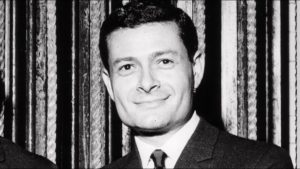
"Does Jerry know about this call?"
Charles told me that their immediate concern was for their friend. Looking back, he wasn't entirely sure why they called David Merrick rather than Jerry directly. It may have been because Merrick was handling the logistics of the production and had reached out regarding transportation and arrangements.
 Charles and Lee made their position very clear. They would be happy to help, but only if Jerry knew they were coming, wanted their input, and welcomed their advice.
They were assured that he did.
So they boarded a plane and headed to Detroit.
The first thing they discovered upon arriving was that Jerry Herman knew absolutely nothing about it.
Charles admitted that after all these years some details may have become a little blurred, whether it happened in the lobby of the Fisher Theatre or in the hotel. One thing, however, remained crystal clear in his memory.
When Jerry saw them, he turned white.
"What Are You Guys Doing Here?"
His first words were:
"What are you guys doing here?"
Charles and Lee were stunned.
"Don't you know that Gower..." they began.
Jerry didn't know.
Not only had he not invited them, he had no idea they were coming.
Charles recalled being absolutely appalled.
"We are out of here," they told him immediately.
Merrick had assured them that Jerry knew they were coming and had welcomed their participation. They later learned that Gower's reasoning was connected to a large ensemble number Charles and Lee had written for Bye Bye Birdie. Gower apparently felt that writing for large vocal groups was one of their strengths and hoped they might be able to help solve what he felt was a problem with the ending of the show.
Charles was quick to note that he could not remember every detail with certainty.
What he remembered perfectly was Jerry's surprise.
"Jesus, Jerry," they told him. "We're on the next train."
But Jerry was an old friend.
Rather than sending them away, he urged them to stay.
"As long as you guys are here," Jerry said, "why don't you go see it tonight?"
Finding the Missing Piece
They did go to see the show that night. Charles spent considerable time with both Michael Stewart and Gower Champion and quickly realized that there was indeed trouble surrounding the production. Interestingly, Charles did not believe the trouble was the show itself.
As he recalled it, Gower seemed deeply troubled. This was unusual. Charles described Gower as one of the most controlled people he had ever known—a brilliant man, certainly, but not someone who typically wore his emotions on his sleeve.
"There was definitely something bothering him," Charles told me.
Rumors were circulating throughout the company. Charles' close friend Peter Howard, who was never at a loss for backstage gossip, shared stories of personal complications involving members of the cast. Whatever the cause, the atmosphere surrounding the production was tense.
The tension became almost comical.
Charles and Lee were staying in a hotel arranged by Merrick. As they made their way down a hallway, Michael Stewart suddenly opened a door and cautioned them:
"Don't talk to Gower about anything."
Moments later, they arrived at Gower's room.
Gower opened the door and immediately offered the exact opposite advice.
"Don't talk to Mike about anything."
Charles laughed as he recalled the absurdity of the situation. Everyone seemed to be warning them about everyone else.
There were real quarrels taking place behind the scenes.
One thing Charles made clear, however, was that Jerry Herman was not part of any of it.
Despite all the turmoil, Charles and Lee actually liked Hello, Dolly! very much. They thought the show was fundamentally strong. They agreed that there was a problem, but they were not convinced that it was the problem Gower thought needed fixing.
Gower believed the show required a large choral number to bring everything together.
Charles and Lee disagreed.
At Gower's urging, they stayed in Detroit and continued thinking about the show. The more they discussed it, the more convinced they became that the answer lay elsewhere.
The breakthrough came when they returned to Thornton Wilder's The Matchmaker.
Lee Adams, according to Charles, was particularly perceptive in identifying what was missing.
As they reread the play, one phrase leaped off the page:
"Before the parade passes by."
That phrase, Charles believed, contained the emotional key to Dolly Levi's journey.
The issue was not the lack of a big production number.
The issue was that Dolly's emotional arc had not yet fully landed.
Charles and Lee explained their thinking to Gower. They saw the phrase not merely as dialogue but as the thematic heart of the story. It represented Dolly's realization that life was still waiting for her and that she had to seize it before the opportunity passed her by.
Gower immediately understood.
"My God!" he said. "You guys have solved it. Of course it needs a song."
And just like that, the assignment changed.
Gower asked them to return to New York and write a song built around that idea.
What happened next would lead to one of the most fascinating chapters in Hello, Dolly! history.
The Song That Almost Was
Gower asked Charles and Lee to write a song called Before the Parade Passes By.
They did exactly that.
Charles was always honest about the result.
He didn't think their version was a great song.
It contained the same spirit and addressed the same dramatic moment, but in his opinion Jerry Herman ultimately wrote a far better song than the one they created.
What Charles and Lee had done was identify the emotional destination.
They reimagined the scene as a prelude to Dolly's conversation with Ephraim, drawing directly from Thornton Wilder's original play. The moment suddenly had focus. Emotionally, it became the landing point the act had been missing.
They returned to New York, wrote the song, sent it to Gower, and fully believed that Jerry knew about everything that had transpired.
They also understood that implementing their ideas required significant restructuring of the end of the act.
They worked hard on it.
And they loved the work.
At that point, they thought they had simply helped some friends solve a problem.
They had no idea how complicated things were about to become.
Hurt Feelings and Hard Lessons
Charles and Lee returned to New York energized by the work they had done. They believed they had helped identify a solution, written a song, and contributed meaningful ideas toward strengthening the show. Most importantly, they believed everyone involved understood what had happened and why.
Then the phone stopped ringing.
Hello, Dolly! closed in Detroit and moved on to Washington. The reviews had not been disastrous, but the show was not yet the phenomenon it would eventually become. Charles and Lee knew that significant restructuring was taking place at the end of the first act and that a song called Before the Parade Passes By was going into the show.
What they didn't know was whose version was being used, what changes had been made, or even whether anyone intended to acknowledge the work they had contributed.
As Christmas approached, they found themselves increasingly confused and hurt.
Charles was particularly frustrated because at the same time he was dealing with challenges surrounding Golden Boy, the new musical that would eventually star Sammy Davis, Jr. He had plenty of concerns of his own, but he still wanted to understand what was happening with Dolly.
He called Washington.
Michael Stewart answered.
When Charles asked about the rewrites and the new material, Michael quickly passed the phone to Gower Champion.
Gower told him that the material was going into the show, but seemed unwilling—or unable—to discuss the details. Charles recalled feeling that every conversation ended before any real answers were given.
When he called Merrick's office, nobody seemed to know anything.
Or perhaps nobody wanted to know anything.
Either way, Charles and Lee felt increasingly shut out of a process they had helped shape.
What hurt most was not money.
It was silence.
They had never signed contracts. They had never negotiated terms. They had traveled to Detroit and devoted their time simply because Gower and Michael were friends and because they wanted to help.
Charles often said that if someone had simply picked up the phone and said, "Thank you, we're using some of your ideas," there probably never would have been a conflict.
Instead, there was nothing.
Looking back, Charles joked that Merrick could have at least sent them an ashtray.
Charles was a smoker then, and he often used that example when recounting the story years later.
An ashtray.
A thank-you note.
Any acknowledgment at all.
Something.
As the weeks passed, hurt feelings turned into anger.
Charles consulted an attorney and asked whether he had any legal standing.
The response surprised him.
"Yes," she said, "but I can't do anything about it because I'm Mike's lawyer too."
Eventually another lawyer became involved. A telegram was sent to the company stating that the material Charles and Lee had contributed could not be used unless someone explained what was happening.
By this point the situation had escalated dramatically.
Christmas had come and gone.
Feelings had been hurt.
Assumptions had been made.
Friendships had been strained.
What had begun as an effort to help friends solve a creative problem had evolved into a genuine feud.
Charles remembered that Gower eventually stopped calling him "Buddy," the nickname everyone used.
Instead, he became "Mr. Strouse."
That small change spoke volumes.
The dispute grew larger than anyone intended.
Yet even while recounting the story decades later, Charles never sounded angry.
If anything, he sounded disappointed.
What lingered wasn't the argument itself.
It was the feeling that a simple conversation could have prevented the entire misunderstanding.
And perhaps that was the hardest lesson of all.
Charles on Jerry Herman
One thing Charles Strouse wanted to make absolutely clear was that his disagreements surrounding Hello, Dolly! were never with Jerry Herman.
Never.
In fact, throughout our conversation, Charles spoke of Jerry with enormous affection, admiration, and respect.
As he reflected on those turbulent weeks in Detroit and Washington, Charles repeatedly emphasized that Jerry was a total innocent in the entire situation. Jerry had been as surprised as anyone when Charles and Lee Adams suddenly appeared in Detroit. He had not invited them, had not been consulted about their arrival, and was not responsible for the communication breakdown that followed.
"Jerry is and was a total innocent in these proceedings," Charles told me.
What Charles and Lee contributed was an idea.
They helped identify a dramatic destination. They found the phrase "Before the Parade Passes By" in Thornton Wilder's The Matchmaker and recognized its importance to Dolly Levi's emotional journey. They suggested the direction.
Jerry Herman wrote the song.
And Charles never hesitated to acknowledge that fact.
In fact, he believed Jerry's version was better than the one he and Lee had written.
Theirs, he said, was a little more angular. Jerry's became the classic audiences know and love today.
Charles always felt they had contributed to shaping the moment and planting the seed, but he never attempted to diminish Jerry's achievement. Quite the opposite. He regarded Hello, Dolly! as a great musical and considered Jerry Herman one of the great craftsmen of the American musical theater.
That admiration extended beyond Hello, Dolly! itself.
Charles recalled the lawsuit brought against Jerry by songwriter Mack David, who claimed that the opening bars of "Hello, Dolly!" resembled a phrase from an earlier song called "Sunflower."
Charles knew Mack personally and thought the lawsuit was without merit.
As he explained it, musical phrases repeat throughout history. Similar passages can be found in Bach, Mozart, Copland, and countless other composers. To Charles, there simply wasn't a case.
Jerry, however, chose not to fight.
At the height of Hello, Dolly!'s success, Jerry decided to settle rather than engage in a lengthy legal battle.
Charles remembered telling him he was crazy.
Jerry's response reflected the kind of man he was.
Rather than prolonging conflict, Jerry simply wanted peace.
That generosity stayed with Charles.
It reinforced what he already knew about his friend.
"That's the kind of guy Jerry is," Charles said. "He's very giving."
As our conversation drew to a close, Charles returned to the subject once more.
He worried that some people might interpret his recollections as criticism of Jerry or as an attempt to claim credit for something that rightly belonged to another artist.
Nothing could have been further from the truth.
Charles was adamant that Jerry Herman's creativity, talent, and contribution to Hello, Dolly! stood entirely on their own.
If there was any lingering sadness in the story, it stemmed from the misunderstandings that occurred among friends—not from the work itself.
The work, after all, was magnificent.
"Jerry is a great man," Charles told me.
Then he paused.
"I've known him for years and I think he's a great talent."
Coming from a composer of Charles Strouse's stature, there may have been no higher compliment.
Who Could Play Dolly Today?
Editor's Note (2026): Charles' comments regarding future casting possibilities for Dolly Levi reflect his personal thoughts at the time of this interview. Several performers mentioned in this section, including Linda Lavin, have since passed away. Their inclusion reflects the period in which this conversation originally took place.
Like every theater lover, Charles had thoughts about who might step into Dolly Levi's shoes in future productions.
He was quick to point out that Carol Channing was a unique anomaly—a performer who could never truly be duplicated.
"Carol was a product of her time," Charles told me. "There is nobody like her anymore."
At the same time, he believed one of the strengths of Hello, Dolly! was that the role could be approached from many different angles.
When I asked who might be able to play Dolly and sell tickets, Charles didn't hesitate to offer a few names.
"Beyoncé, Christine Ebersole, Linda Lavin. Anne Hathaway is a big name."
But Charles wasn't simply thinking about celebrity casting.
He believed Dolly Levi was, at its heart, a great acting role.
Carol had been a unique choice. Pearl Bailey had been a unique choice. Each brought something entirely different to the part, yet both succeeded brilliantly.
Charles felt that a gifted director could uncover many different interpretations of Dolly.
"There are a lot of older actresses still working who are not known for musicals," he observed.
He pointed to the enormous success of the all-Black production starring Pearl Bailey as evidence that audiences were willing to embrace fresh perspectives on the material.
"Perhaps that's the way to go," he said. "It certainly would be very popular. There are a great number of Black female entertainers who would be ideal."
What struck me during this portion of our conversation was that Charles wasn't focused on recreating Carol Channing.
In his mind, that would be impossible.
Instead, he believed the role should continue to evolve with each generation, allowing new performers to bring their own life experiences, strengths, and interpretations to Dolly Levi.
For Charles, that was part of the enduring genius of Hello, Dolly!
The role survives because the character survives.
And Dolly Levi, in the hands of a great artist, remains timeless.
Looking Back
Looking back on this conversation today, I am struck by Charles Strouse's generosity, honesty, and deep respect for collaboration.
Even when discussing disagreements, he never lost sight of the friendships.
Even when recalling hurt feelings, he never lost his admiration for Jerry Herman.
Most importantly, he understood something every great artist eventually learns: no one creates a classic alone.
The story of Hello, Dolly! is often told through the names of Jerry Herman, Carol Channing, Michael Stewart, Gower Champion, and David Merrick. Charles Strouse's recollections remind us that Broadway history is also shaped by conversations, friendships, creative sparks, misunderstandings, and moments of inspiration that happen behind the scenes.
What fascinates me most about this story is not who was right or wrong.
It is that a group of passionate artists cared enough about a show to fight for it.
They argued.
They disagreed.
They challenged one another.
And in the end, they created something that has endured for more than sixty years.
Charles often spoke about collaboration. He understood that theater is a living art form. A musical is rarely the result of one person's vision. It is built by writers, composers, directors, choreographers, producers, performers, and countless others, all working toward the same goal—even when they don't always agree on the path to get there.
As I reread this interview following Charles' passing, I am reminded that theater history is not simply found in opening-night reviews, cast recordings, or box office records.
It lives in stories like these.
It lives in the memories of the people who were there.
It lives in the lessons they leave behind.
Charles Strouse left us an extraordinary body of work. His music continues to be sung by schoolchildren, Broadway stars, community theaters, and audiences around the world. Songs like Tomorrow, Put On A Happy Face, and Those Were the Days have become part of our shared cultural memory.
But Charles also left behind something equally valuable: his stories.
Stories that help us understand how Broadway history was made.
Stories that remind us that even legends are human.
Stories that reveal the passion, creativity, humor, and perseverance required to create lasting art.
I am grateful that Charles took the time to share this story with me.
I am grateful that it has been preserved.
And I am honored to be able to share it with you.
Thank you, Charles.
Thank you for the music.
Thank you for the memories.
And thank you for helping create the soundtrack of our lives.
—Richard Skipper
Dedicated to the memory of Charles Strouse (1928–2025), whose music, stories, and legacy continue to inspire generations.
And so they did.