Spider Duncan: The Tallest Barnaby Tucker
For many years, theater audiences and professionals have known him as Spider Duncan.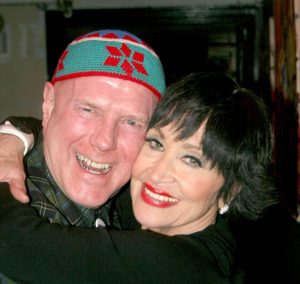
When he joined Carol Channing's first national tour of Hello, Dolly! in 1965, however, he was still Christopher Calkins.
The name change came later.
When Christopher moved to New York, he discovered there was already another Christopher Calkins working in the business. Confusion and crossed wires quickly followed. Rather than continue sorting out the mix-ups, he adopted the name by which generations of theater people would come to know him: Spider Duncan.
Long before Broadway and national tours, however, there was a young boy in Seattle with an extraordinary passion for theater.
Spider often jokes that he was a "musical theater geek" before the term existed.
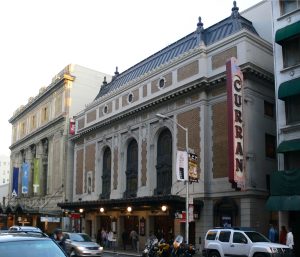 At five years old, he was gathering neighborhood friends in the backyard and staging productions. By seven, everyone around him knew exactly what he wanted to do with his life. His mother was a costume designer, so there was never a shortage of fabrics, costumes, or imagination.
"I was putting on shows before I knew what putting on a show meant," he told me.
The theater wasn't simply an interest.
It was a calling.
As a teenager, Spider immersed himself in every aspect of the performing arts. He choreographed professionally at sixteen, produced shows with his younger brother, served as student body president, and eagerly devoured every cast album he could get his hands on. Every Sunday, he would head to the library to read the Arts and Leisure section of The New York Times.
Musical theater wasn't a hobby.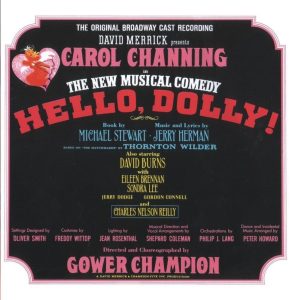
It was an obsession.
After graduating from high school at just seventeen, Spider left Seattle and headed to San Francisco, where he joined the San Francisco Ballet Company. His dance partner during that summer engagement was a young dancer named Ann Reinking.
Neither of them knew they would one day become part of Broadway history.
While living in a large communal house filled with dancers, lawyers, and aspiring artists, Spider stumbled upon what would become the opportunity of a lifetime.
Someone left a copy of The San Francisco Chronicle lying around.
 Buried inside was an announcement that Gower Champion would be holding auditions for dancers for the first national tour of Hello, Dolly! starring Carol Channing.
Spider immediately cut class.
Not because he expected to get hired.
Because he wanted to meet Gower Champion.
That alone seemed worth the risk.
Approximately eighty-five dancers attended the initial audition.
Five were selected.
Spider was one of them.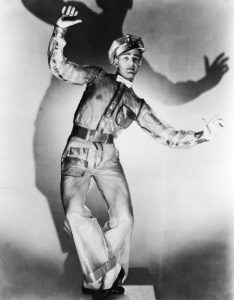
Those finalists were flown to Los Angeles for the next round.
It was Spider's first airplane trip.
"I had never been on a plane before," he recalled. "And here was a free plane ride!"
When he arrived in Los Angeles, he discovered that nearly eight hundred performers from around the country had gathered for the final auditions.
Only eight would be chosen.
Spider was one of them.
At eighteen years old, he walked away from a promising future with the San Francisco Ballet and joined what would become one of the most successful touring productions in Broadway history.
More importantly, he met a man who would shape the rest of his career.
Gower Champion.
The Tallest Barnaby Tucker
When Gower Champion selected Spider Duncan for Carol Channing's first national tour of Hello, Dolly!, he wasn't choosing the typical Barnaby Tucker.
In fact, Spider would become something of an anomaly.
"I was the only tall Barnaby Tucker ever," he told me with a laugh.
Most of the actors who played Barnaby were shorter, youthful-looking, and often blond. Spider was different. He was tall, dark-haired, and fresh out of high school. What he brought to the role, however, was something Gower Champion valued enormously: versatility.
Spider could sing.
He could dance.
He could act.
And perhaps most importantly, he was eager to learn.
He was cast in August of 1965 and joined the company just as Hello, Dolly! was preparing to begin what would become one of the most successful tours in Broadway history.
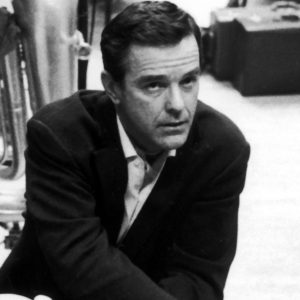
Spider understudied Harvey Evans, who created the role of Barnaby on Broadway and was now playing it opposite Carol Channing on tour. According to Spider, the final decision came down to two young performers.
Himself and Blake Brown.
Blake was a terrific dancer, but Spider's singing ultimately gave him the edge.
The opportunity meant everything to him.
He had just graduated from high school and had already walked away from a promising future with the San Francisco Ballet Company. Now he was stepping into a production directed by Gower Champion and starring Carol Channing.
It was more than a job.
It was a master class.
What Spider remembers most about Gower Champion was the encouragement.
Many directors are quick to point out mistakes. Gower looked for growth.
Every time he returned to visit the company, he would pull Spider aside and tell him how much he had improved.
"He would say that I was the most improved member of the company," Spider recalled.
Those words mattered.
They inspired him to work harder.
In every city they visited, Spider enrolled in dance classes. He practiced constantly. He studied. He watched. He absorbed everything around him.
"I took it very seriously," he said.
He was only eighteen years old.
Gower's faith in him helped shape the artist he would become.
The lessons extended beyond performance. Spider learned discipline, professionalism, and the importance of always bringing your best work to the stage.
No matter what.
Years later, those lessons would remain among the most valuable gifts he carried away from Hello, Dolly!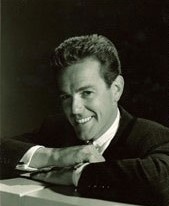 One of the most memorable moments of the tour came when Harvey Evans decided Spider was ready.Harvey had been extraordinarily generous to the young performer from the beginning. Spider spoke of him with enormous affection.
When Harvey felt Spider was prepared, he voluntarily gave up a matinee performance so that his understudy could go on.
The result was unforgettable. "Carol was thrilled. Harvey was thrilled. Everybody was thrilled."
As fate would have it, members of Harvey Evans' fan club were in attendance that afternoon. By the end of the performance, Spider had fans of his own.
A fan club was created on the spot. For a teenager barely out of high school, it was exhilarating.
But the greater reward was the confidence that came from knowing he belonged.
The boy who had once staged productions in his Seattle backyard was now performing alongside Carol Channing in one of the biggest hits in America.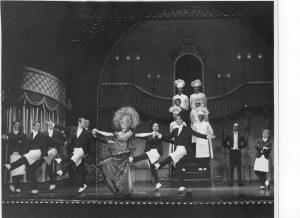
And he was just getting started.
"Gower took me under his wing," Spider said. The mentorship would prove life-changing.
Life with Carol Channing
For Spider Duncan, joining the first national tour of Hello, Dolly! meant more than working in a hit musical.
It meant sharing the stage with Carol Channing.
Like so many theater lovers, Spider admired Carol before he ever met her. But what he discovered during those two years on the road was something even more meaningful than star power.
He discovered a mentor.
Their connection began almost immediately.
Since both Spider and Carol had roots in Seattle, he wanted her to know that he understood the city she came from and was proud to share that connection. On opening night in San Diego, he wrote Carol a note and gave it to her longtime dresser and assistant, Harriet Beal.
What might have been a simple gesture became the beginning of a very special bond.
"It was very sacred," Spider told me.
Carol was remarkably specific about her work. Every gesture, every moment, every beat of a scene had purpose. Spider respected that discipline enormously.
Over time, he came to realize that he was witnessing a true master at work.
In his career, Spider has often said that two performers taught him more than anyone else about what it means to be a complete musical theater artist: Carol Channing and Chita Rivera.
"They could act, sing, and dance," he said. "They were masters."
What impressed him most about Carol was her consistency.
No matter what city they were playing, no matter how long the tour had been running, Carol never missed a performance.
Never.
Night after night, she delivered the same commitment, the same professionalism, and the same joy.
That example stayed with Spider for the rest of his career.
"Carol was very instrumental in teaching me that you never miss a performance."
It wasn't simply about showing up.
It was about honoring the audience.
Every audience.
Every night.
Every performance.
There were also moments of tremendous generosity.
Carol genuinely cared about her company. Throughout the tour, she found ways to make life on the road special. One of Spider's fondest memories involved the midnight movie screenings Carol would arrange for the cast.
After performances, the company would board buses with boxed dinners and head to private screenings of major films before their public release.
One evening they saw Who's Afraid of Virginia Woolf? before it opened.
For a young performer barely out of his teens, it felt magical.
There were opening-night parties in every city. Carol always made an appearance. There were Sunday brunches, cast gatherings, and countless opportunities for company members to feel that they were part of something bigger than themselves.
Because they were.
This was not simply another touring production.
This was Hello, Dolly! at the height of its cultural impact.
The company was sold out months before arriving in most cities. Audiences treated the cast like celebrities. In town after town, people lined up to welcome them.
And at the center of it all was Carol Channing.
Spider remembers countless moments onstage with her. Whether he was playing Barnaby Tucker, appearing as the wallpaper hanger in the final scene, or sharing one of the many carefully choreographed moments of contact that Gower Champion built into the production, there was always a sense of connection.
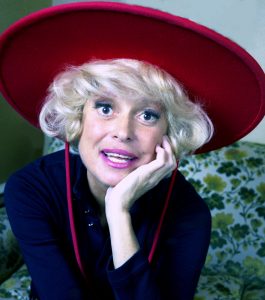 Carol understood that theater is personal. She made her fellow performers feel seen.
She made audiences feel seen. And that lesson may have been the most important one of all.
Looking back today, Spider speaks about Carol not simply as a star, but as a role model.
The discipline. The commitment.
The generosity. The joy.
Those qualities shaped him as a performer, a choreographer, a director, and a leader.
More than fifty years later, he still carries those lessons with him.
And every time he thinks about Hello, Dolly!, he thinks about the woman who made them possible.
Carol Channing.
The White House and the Watts Riots
One of the extraordinary aspects of touring with Hello, Dolly! in the 1960s was that the company often found itself at the center of history.
Sometimes those moments were glamorous.
Sometimes they were sobering.
And occasionally, they were both.
Spider Duncan had just turned eighteen when the company arrived at Los Angeles' Dorothy Chandler Pavilion in September of 1965. The engagement was one of the most anticipated theatrical events of the season. Tickets had sold out months in advance, and excitement surrounding Carol Channing's first national tour was reaching a fever pitch.
But outside the theater, Los Angeles was experiencing a very different reality.
The company arrived during the aftermath of the Watts Riots.
From their rehearsal studios, cast members could see parts of the city still struggling with the effects of the unrest. Businesses closed early. Streets emptied long before dark. There was an uneasiness in the air that was impossible to ignore.
"It was a very scary time," Spider recalled.
For a young performer fresh out of high school, it was a powerful reminder that the world outside the theater doors could be vastly different from the one being created onstage each evening.
Yet even amid uncertainty, the company experienced remarkable moments.
During their Los Angeles engagement, Hello, Dolly! participated in an Actors' Equity benefit that attracted some of the biggest names in Hollywood.
Spider still speaks about that evening with amazement.
Jimmy Stewart was there.
Hollywood royalty was there.
Virtually every major star in town seemed to be in attendance.
"They went crazy," Spider remembered.
The event raised a tremendous amount of money and became one of the great highlights of the tour's early months. For the young members of the company, it felt as though they had been welcomed into the very center of the entertainment world.
And then came an invitation even more extraordinary.
On January 16, 1967, the company traveled to Washington, D.C., for a command performance at the White House.
President Lyndon B. Johnson and First Lady Lady Bird Johnson had invited Carol Channing and members of the company to perform.
Carol had actively campaigned for Johnson during his presidential campaign, even adapting the lyrics of Hello, Dolly! into a political anthem:
"Be our guide, Lyndon!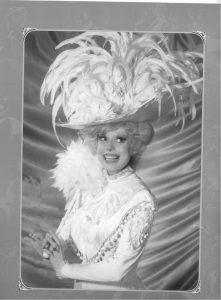
Lady Bird, at your side, Lyndon!"
For Spider, performing at the White House was one of those moments that seemed almost impossible to believe.Just a short time earlier, he had been a teenager in Seattle dreaming about a life in the theater. Now he was standing in the White House as part of one of the most celebrated productions in America. The contrast between those two experiences—the tension surrounding Los Angeles during the Watts Riots and the honor of performing for the President of the United States—captures something unique about the era.
America was changing. The theater was changing.
The culture was changing. And through it all, Hello, Dolly! somehow remained a source of joy, optimism, and connection.
Spider understood even then that he was witnessing more than a successful national tour. He was witnessing a moment in American history.
And he was fortunate enough to have a front-row seat.
A Theater Family
When Spider Duncan looks back on his time with Hello, Dolly!, the memories that shine brightest are not necessarily the sold-out houses, the White House performance, or even sharing the stage with Carol Channing.
It is the people.
More than fifty years later, what he remembers most is the feeling of belonging to a family.
A real family.
The company traveled together, rehearsed together, celebrated together, and weathered challenges together. They spent more time with one another than they did with their own relatives. In city after city, they created a community built on trust, professionalism, and a shared commitment to excellence.
"It was a great company," Spider told me. "A great team."
Those values came from the top.
Carol Channing expected professionalism from everyone around her, but she also led with generosity. Gower Champion set a standard of excellence that inspired performers to keep growing. The stage management team ensured that every member of the company felt supported and valued.
Spider credits Lee Murray, Henry Sutton, and Mary Porter Hall with helping to create an environment where more than fifty people could function as a cohesive unit both onstage and off.
"They were amazing," he said.
The bonds extended far beyond the theater.
There were opening-night parties in every city. Sunday brunches became cherished traditions. Cast members gathered after performances, celebrated milestones together, and supported one another through the inevitable ups and downs of life on the road.
Many of those friendships have lasted a lifetime.
Spider believes one of the greatest gifts Hello, Dolly! gave him was an understanding of what a theater company should be.
Not simply a collection of performers.
A family.
That lesson would stay with him throughout his career as a performer, director, choreographer, and producer.
Whenever he assembled a cast or creative team, he tried to recreate the sense of community he experienced on Hello, Dolly!
"From the first day of rehearsal," he said, "you are creating the possibility of friendships that can last forever."
The tour was not without heartbreak.
One of the most painful moments came in August of 1966 when tragedy struck the company.
Andy Bew, one of the youngest members of the cast, his mother Cleone, and fellow cast member Blake Brown were involved in a boating accident on Wonder Lake in Illinois. A large wave created by a speeding boat capsized their vessel.
Cleone was killed instantly.
The loss devastated the company.
Spider had been particularly close to Cleone, who often acted as a mother figure not only to her own son but to many of the younger performers on the tour.
"It was like losing my own mother," he recalled.
Returning to the stage the following evening was one of the most difficult things the company had ever faced.
Yet they did what theater families do.
They showed up for one another.
They grieved together.
They supported one another.
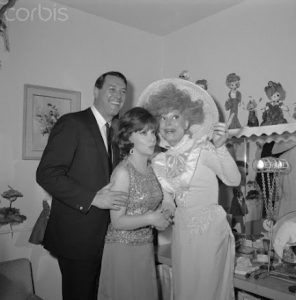 And they carried on. Looking back today, Spider believes that experience taught him another important lesson about life in the theater. The audience sees the performance.
What they don't always see is the community that makes that performance possible. The friendships.
The sacrifices. The shared joys.
The shared losses. Those are the things that endure.
Long after the curtain falls. Long after the tour ends.
Long after the applause fades. For Spider Duncan, that may be the true legacy of Hello, Dolly!—not just the show itself, but the extraordinary family it created.
Lessons from Gower
If Carol Channing taught Spider Duncan the importance of professionalism, Gower Champion taught him how to build a life in the theater.
More than half a century later, Spider still speaks about Gower with enormous affection and gratitude.
"Gower took me under his wing," he told me.
For a teenager who had just graduated from high school, that mentorship meant everything.
At eighteen, Spider found himself working with one of the most influential director-choreographers in Broadway history. Gower had already transformed musical theater with productions like Bye Bye Birdie, and his work on Hello, Dolly! would become legendary.
What impressed Spider most was not Gower's reputation.
It was his generosity.
Gower paid attention.
He noticed effort.
He encouraged growth.
Every time he returned to visit the company, he would seek Spider out and tell him how much he had improved.
"He always told me I was the most improved person in the company," Spider recalled.
Those words became fuel.
Spider responded by working harder than ever.
In every city the tour visited, he enrolled in dance classes. He rehearsed constantly. He studied every aspect of the production. He watched how Gower worked, how he communicated, how he solved problems, and how he inspired people.
The encouragement wasn't empty praise.
It was mentorship.
And it changed the course of Spider's life.
Gower treated him as a serious actor, singer, and dancer—not simply a young ensemble member. That confidence helped Spider begin to see himself differently.
"It was a life-changing experience," he said.
Years later, as Spider established himself as a director and choreographer, he realized just how much of Gower's influence he carried with him.
"I basically fashioned my whole directing and choreographing career after him."
The lessons extended far beyond staging and dance steps.
Gower taught him to always be prepared.
To keep learning.
To continue improving.
To never become complacent.
Most importantly, Gower taught him that great theater requires discipline.
Spider often speaks about the professionalism that defined the Hello, Dolly! company.
People arrived early.
They were warmed up before performances.
They respected one another.
They respected the audience.
And they understood that being part of a successful production was a privilege.
Those standards became the foundation of Spider's own career.
Even decades later, he believes some of those values have become less common in the theater world.
Not because artists care less.
But because the culture has changed.
In the Hello, Dolly! company, missing a performance was almost unthinkable.
Carol Channing never missed a performance.
Neither did Spider.
The expectation was simple: the audience deserved your very best.
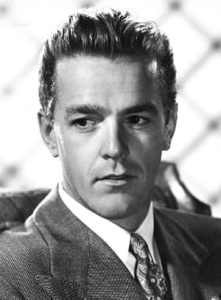 Every single night. Spider also gained an extraordinary education behind the scenes.
Because of his photographic memory and his deep knowledge of the production, the stage management team often relied on him during understudy rehearsals. He became intimately familiar with the show's blocking, choreography, and structure.
In many ways, he became part of the living "bible" of Hello, Dolly!—helping preserve the details that allowed the production to be recreated and maintained at the highest level.
Looking back, Spider believes that Gower Champion's greatest gift was creating an environment where excellence felt attainable.
He didn't simply direct people.
He inspired them to become better versions of themselves.
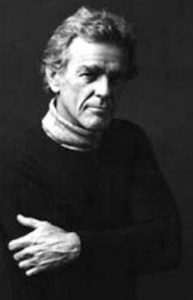 For an ambitious eighteen-year-old performer from Seattle, that lesson proved invaluable.
And it is one he has carried with him ever since.
Long after the curtain came down.
Long after the tour ended.
And long after Hello, Dolly! became part of Broadway legend.
When the Heart Tells You It's Time
For most performers, landing a role in Hello, Dolly! opposite Carol Channing would have been a dream come true.
For Spider Duncan, it was.
But one of the most important lessons he learned from the experience had nothing to do with success.
It had to do with knowing when it was time to move on.
By the time Spider left the company, he had spent eighteen months touring the country with one of the biggest hits in America. The production was sold out everywhere it played. The cast was beloved. The work was steady. The future seemed secure.
And yet one evening, something changed.
Spider walked onto the stage and realized his heart was no longer in it.
Not because he disliked the show.
Not because he was unhappy.
Not because anything was wrong.
Simply because he knew, deep down, that it was time for the next chapter.
"I came on stage one night and realized my heart was no longer in it," he told me.
That night, he gave his notice.
Two weeks later, he was gone.
Many performers might have stayed.
The show was a guaranteed success.
The audiences loved it.
The opportunities that came with being associated with Hello, Dolly! were significant.
But Spider had been taught something important.
If you cannot give one hundred percent to the audience, you owe it to them—and to yourself—to move on.
That lesson came in part from the example set by Carol Channing and Gower Champion.
Both demanded complete commitment.
Not perfection.
Commitment.
The audience deserved your best every night.
If your heart wasn't fully engaged, then it was time to discover where it belonged.
Looking back, Spider sees that decision as one of the most important of his career.
Leaving Hello, Dolly! was not walking away from success.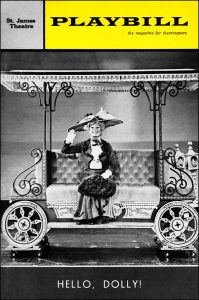 It was walking toward growth.
The lessons he learned during those eighteen months would continue to guide him as a performer, choreographer, director, producer, and mentor. And because he left when he did, he carried the experience with gratitude rather than complacency.
The show remains special.The memories remain vivid. The relationships endured.
Perhaps most importantly, he left knowing he had given everything he had to give. That is a lesson many of us spend a lifetime trying to learn.
There is wisdom in perseverance. But there is also wisdom in recognizing when one chapter has fulfilled its purpose.
Spider Duncan had the courage to listen when his heart told him it was time.And that courage helped shape the remarkable career that followed.
The Legacy of Hello, Dolly!
More than half a century after joining Carol Channing's first national tour of Hello, Dolly!, Spider Duncan still speaks about the experience with a mixture of gratitude, pride, and wonder.
The show changed his life.
It opened doors.
It introduced him to mentors.
It taught him discipline.
It gave him lifelong friendships.
And it established a standard of professionalism that would guide him throughout his career.
But Spider's connection to Hello, Dolly! extends beyond personal memories.
He believes the show remains one of the great masterpieces of the American musical theater.
"The music is great," he said simply.
For Spider, the show's enduring popularity comes down to something very basic: it works.
The score is unforgettable.
The characters are richly drawn.
The humor remains timeless.
And beneath all the laughter is a story about second chances, courage, and choosing life.
Over the years, Spider has watched countless productions of Hello, Dolly! and has seen several remarkable actresses put their own stamp on Dolly Levi.
In addition to Carol Channing and Eve Arden, he recalls seeing Pearl Bailey and Martha Raye in the role.
Each brought something unique.
Pearl Bailey's all-Black company was groundbreaking, a bold and historic move by producer David Merrick that challenged expectations and expanded audiences.
But when asked which performance moved him most deeply, Spider points to Martha Raye.
"I can still close my eyes and see her speaking to Ephraim," he told me. "I was moved to tears."
For Spider, Martha brought an emotional depth to the role that was unforgettable.
That ability to support very different interpretations is one reason he believes Hello, Dolly! continues to thrive.
The show belongs to every generation.
And every generation finds something new in it.
Spider also believes much of the show's lasting power can be traced directly to Gower Champion's staging.
Even today, the title number remains one of the most celebrated moments in musical theater.
The Waiters' Gallop.
The singing waiters.
The choreography.
The sheer sense of theatrical joy.
"It was the genius of Gower Champion," Spider said.
No one had seen anything quite like it.
Not only were the performers dancing.
The scenery seemed to dance.
The entire theater came alive.
That moment became permanently imprinted in the minds of audiences and theater professionals alike.
"It is difficult to separate it from what Gower created," Spider reflected.
Like Michael Bennett's A Chorus Line or Bob Fosse's Chicago, the original staging became part of the show's DNA.
Spider knows something else about Hello, Dolly! that many younger theatergoers may not fully appreciate.
During the years he toured with the production, the show was a cultural phenomenon unlike anything he had ever experienced.
The company was sold out before arriving in most cities.
There were no empty seats.
Ever.
In Tulsa, they played an arena that seated ten thousand people.
In city after city, audiences treated the cast like celebrities.
Opening-night parties were major events.
People lined up to meet the company.
The excitement was overwhelming.
"We were kind of theatrical royalty at that time," Spider recalled.
It was a remarkable period in American theater history.
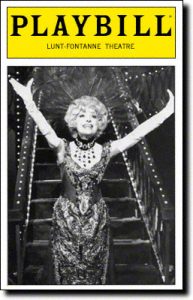 The country was changing.
The culture was changing.
Soon, productions like Hair would usher in a new era.
But for Spider, those years represented the height of the classic American musical.
A time when audiences embraced shows like The Music Man, South Pacific, The King and I, and Hello, Dolly! with extraordinary enthusiasm.
When asked where Hello, Dolly! ranks among the many productions he has worked on, Spider doesn't hesitate. "It is one of the top five shows of my career."
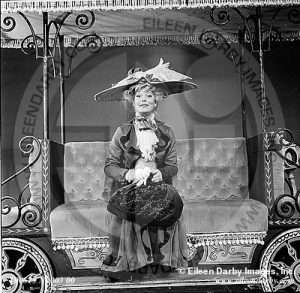 Not simply because of its success.
Not simply because of Carol Channing. But because of what it taught him.
The show helped shape the artist he became.
The lessons he learned about professionalism, teamwork, discipline, preparation, and commitment stayed with him long after the final curtain. Most of all, Hello, Dolly! taught him the value of belonging to something larger than yourself.
A company. A family.
A legacy. More than fifty years later, Spider Duncan remains proud to have been part of that legacy.And Broadway history is richer because he was.
Looking Back
As I reflect on my conversation with Spider Duncan, I am reminded that Hello, Dolly! was never simply a hit musical.
It was a master class.
For Spider, it was the beginning of a remarkable career that would take him from performer to choreographer, director, producer, mentor, and theatrical leader. Yet even after all these years and all the accomplishments that followed, the lessons he learned on that first national tour remain at the heart of who he is.
Theater historians often focus on opening nights, reviews, awards, and box office records.
What interests me most are the people.
The relationships.
The lessons.
The moments that shape a life.
Spider's story is ultimately about all of those things.
It is about a teenager from Seattle who loved theater so much that he cut class to attend an audition just for the chance to meet Gower Champion.
It is about a young performer who found himself standing onstage alongside Carol Channing in one of the biggest hits of the twentieth century.
It is about a company that became a family.
It is about discipline, professionalism, loyalty, and growth.
Most importantly, it is about mentorship.
Throughout our conversation, Spider spoke repeatedly about the people who invested in him. Gower Champion encouraged him. Harvey Evans believed in him. Carol Channing inspired him. The stage management team trusted him. Together, they helped shape the artist he would become.
That is one of the recurring themes I have found throughout my CallonDolly.com journey.
The people connected to Hello, Dolly! rarely speak only about the show.
They speak about one another.
They speak about friendships.
They speak about generosity.
They speak about the passing of knowledge from one generation to the next.
Perhaps that is why Hello, Dolly! continues to endure.
Yes, it has one of the greatest scores ever written.
Yes, it features one of the most beloved leading ladies in musical theater history.
Yes, Gower Champion's staging remains legendary.
But at its core, it is a story about connection.
About choosing life.
About embracing possibility.
About stepping back into the parade before it passes by.
S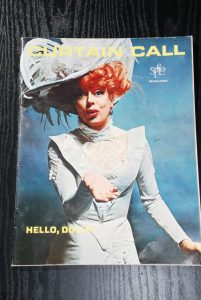 pider Duncan embraced that lesson early. He listened when his heart told him it was time to move on. He carried the best of what he learned with him. And he spent the rest of his career sharing those lessons with others.
That may be the greatest legacy of all. Not simply appearing in a historic production.
But taking what you learned from that experience and using it to inspire the next generation. I am grateful to Spider for sharing his memories with me.
I am grateful that these stories have been preserved. And I am grateful that, through conversations like this, we can continue to celebrate the artists, the friendships, and the extraordinary moments that helped create Broadway history.
Because long after the curtain falls, it is the people we remember.And Spider Duncan is certainly one of those people.